On this page
CRM tool selection statistics are data points covering adoption rates, buyer criteria, ROI outcomes, failure rates, and platform market share that help companies evaluate and choose CRM software. In 2026, the CRM market has grown to $126.17 billion with 91% of companies with more than 11 employees already running a CRM — meaning most buyers are choosing between platforms, not deciding whether to adopt.
If you're evaluating a CRM in 2026, you're navigating a market simultaneously reshaped by AI-native workflows, autonomous agents, and a wave of companies switching platforms for the first time in years. The question is no longer whether to adopt a CRM, but which one fits your stack, your team, and your growth stage.
This guide consolidates the most relevant CRM adoption, ROI, failure, and selection-criteria data for 2026, with a specific focus on what AI companies are prioritizing differently from traditional buyers.
CRM Tool Selection Statistics: Quick Reference
The most cited CRM tool selection statistics for 2026, drawn from G2, DemandSage, and Gartner research:
- 91% of companies with 11+ employees use CRM software
- 45% of CRM buyers rank automation as their #1 selection requirement
- 70% of CRM projects fail to meet their stated goals
- $8.71 average ROI per dollar spent on CRM; $13.50 with AI capabilities
- 94% of tech companies use CRM — highest adoption of any industry
- 28% of mid-market teams are actively evaluating a platform switch in 2026
- 43% of CRM failures are caused by poor user adoption
- 83% of companies already use AI capabilities within their CRM
- 45% of CRM users report their data is not prepared for AI use
- 87% of CRM deployments are now cloud-based
Key Takeaways
- 94% of tech companies use CRM — the highest adoption rate of any industry, compared to 86% in manufacturing and 82% in healthcare.
- AI agent capability has replaced price as the primary CRM selection criterion for AI companies in 2026.
- 28% of mid-market teams are actively evaluating a platform change in 2026 — the highest rate since 2019.
- 70% of CRM projects still fail to meet their stated goals, with poor user adoption (43%) as the leading cause.
- CRM combined with AI delivers $13.50 ROI per dollar — 55% higher than standalone CRM at $8.71.
- 45% of CRM users say their data is not prepared for AI use — a critical gap for companies building AI workflows on top of their CRM.
What AI Companies Prioritize in CRM Selection in 2026
The most significant shift in CRM tool selection statistics for AI companies is a change in the primary buying criterion. Historically, price dominated vendor selection conversations. In 2026, AI agent capability has moved to the top of the evaluation scorecard for AI-native teams, according to research from G2's State of AI in CRM.
This matters because AI companies have fundamentally different CRM requirements than traditional SaaS or services businesses. They run product-led growth motions, operate usage-based billing models, and expect their CRM to connect natively to AI workflows — not just act as a contact database. When 45% of CRM users report that their data is not ready for AI use, that's not a generic complaint; for AI-first teams, it's a blocker.
The buyer profile for CRM selection statistics searches also tells a story: search intent analysis shows these queries are driven by product managers, VPs of Sales, and CTOs building business cases for a platform switch — not first-time adopters. They're looking for data that validates or challenges an existing hypothesis about which platform to move to.
CRM Market Size and Growth: 2026 Numbers
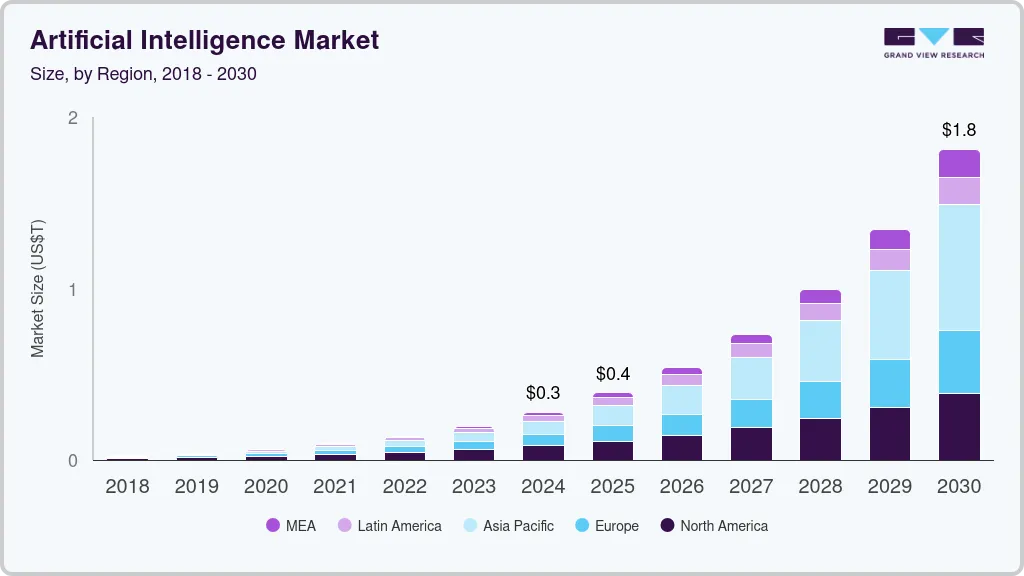
The overall CRM market reached an estimated $112.91 billion in 2025 and is projected to hit $126.17 billion in 2026, growing at a 12.6% CAGR through 2032 toward a $262.74 billion endpoint. That top-line growth, however, masks a faster-moving sub-category: the AI CRM segment.
The AI-specific CRM market was valued at $12.42 billion in 2023 and is forecast to reach $75.27 billion by 2030 — a 29.4% CAGR that outpaces the broader market by more than double. Gartner's sales technology forecast pegged the CRM sales software category at $25.7 billion in 2024, growing to $28.7 billion in 2025 — a 12.2% increase.
Two structural shifts are driving the acceleration:
- Autonomous AI agents: By 2026, AI agents are projected to handle 60% of routine CRM tasks — lead qualification, follow-up scheduling, data entry — reducing the manual overhead that historically made CRM adoption painful.
- Revenue Action Orchestration: Gartner released its first Magic Quadrant for Revenue Action Orchestration in December 2025, signaling that CRM has evolved from a record-keeping tool to an active orchestration layer.
For AI companies evaluating platforms, the growth trajectory matters: a CRM category growing at nearly 30% annually means the feature gap between platforms narrows quickly. What differentiates platforms today may be commoditized within 18 months.
CRM Adoption by Industry: Tech and AI Company Rates
CRM tool selection statistics by industry reveal that tech companies lead all sectors in adoption at 94%, according to SLT Creative's industry benchmark data. For AI companies specifically, this baseline is even higher — the nature of the business (data-driven, SaaS-model, growth-stage) makes CRM infrastructure non-optional.
| Industry | CRM Adoption Rate |
|---|---|
| Technology | 94% |
| Manufacturing | 86% |
| Education | 85% |
| Healthcare | 82% |
| Human Resources | 81% |
| All companies (11+ employees) | 91% |
| Small businesses | 71% |
Source: SLT Creative, DemandSage
The 91% adoption figure for companies with more than 11 employees, from DemandSage's 2026 CRM statistics, holds up across nearly every study. Among small businesses (under 11 employees), adoption drops to around 50-71% depending on the dataset and definition.
One notable finding: 87% of companies now use cloud-based CRM, up from under 20% a decade ago. This near-universal shift to cloud has eliminated most of the deployment complexity that historically inflated failure rates. The on-premise holdouts are concentrated in regulated industries (defense, government), not in the tech sector.
For AI companies, the adoption story is less interesting than the utilization story: 43% of CRM customers use fewer than half the features available. Platform capability doesn't matter if teams don't actually use it.
What Drives CRM Selection Decisions? Buyer Priority Data
CRM selection decisions are driven by a mix of functional requirements, total cost of ownership, and organizational readiness factors. Based on available buyer research, these are the criteria that matter most in 2026 — ranked by frequency of mention across decision-maker surveys:
- AI agent and automation capability — In 2026, 45% of CRM buyers rank automation as their #1 requirement, and AI agent capability has emerged as the top differentiator for AI-native teams specifically.
- Integration depth — How well the CRM connects to the existing stack: billing systems, product analytics, marketing automation, and communication tools. For AI companies, this includes API access quality.
- Lead scoring and pipeline intelligence — 62% of sales teams now use AI for lead scoring within CRM; buyers evaluate how sophisticated the built-in models are vs. requiring custom configuration.
- Data quality and readiness — Given that 45% of CRM users say their data isn't AI-ready, buyers increasingly ask vendors about data hygiene tooling and import quality controls upfront.
- User adoption support — With poor user adoption cited as the cause of 43% of CRM failures, training resources, onboarding quality, and change management tooling now appear on evaluation scorecards.
- Mobile parity — 81% of users access CRM from multiple devices; mobile UX gaps are a disqualifier in modern evaluations.
- Pricing structure at scale — Per-seat pricing becomes a growth tax for fast-scaling AI companies; usage-based or flat-fee models score well in this segment.
- Switching costs and data portability — Fear of switching is real: data loss, downtime, and retraining costs create paralysis. Buyers now ask for data export documentation before signing.
For AI companies specifically, there's a ninth criterion that rarely appears in general buyer surveys: whether the CRM data can serve as a training or fine-tuning input for internal models.
CRM Selection Criteria: Traditional vs. AI Companies
| Selection Criterion | Traditional Buyers | AI Company Buyers | Priority Shift |
|---|---|---|---|
| Automation capability | #1 (45% of buyers) | Table stakes | No change |
| Price / TCO | #2 | #4 | Deprioritized |
| Integration depth | #3 | #2 | Unchanged |
| AI agent capability | Low priority | #1 | Major shift |
| API-first architecture | Rarely evaluated | #3 | New requirement |
| Data readiness for AI | Not evaluated | #5 | New requirement |
| User adoption support | #4 | #6 | Unchanged |
| Agent framework compatibility | N/A | #7 | Entirely new |
Source: G2 State of AI in CRM, DemandSage 2026 CRM Statistics
The ninth criterion — whether CRM data can serve as a training or fine-tuning input — requires structured data, consistent field taxonomy, and clean historical records. These requirements don't appear in traditional CRM RFPs.
AI CRM Adoption: How AI Companies Use CRM Differently
AI-native companies are not just adopting CRM at higher rates — they're using it differently. Here's what the data shows:
- 83% of companies report using AI capabilities within their CRM in some form, ranging from basic lead scoring to fully autonomous follow-up agents.
- 65% of businesses now use CRM platforms with generative AI features, with that figure rising faster in tech and AI sectors than in traditional industries.
- 62% of sales teams use AI for lead scoring within their CRM, making AI-powered lead prioritization the most common AI CRM use case.
- 34% increase in sales productivity is attributed to AI CRM adoption, based on aggregate performance data across surveyed companies.
- Sales professionals using AI CRM tools weekly saw a 30-50% improvement in response times to inbound leads.
The longer-term trajectory is dramatic: AI and big data CRM adoption is projected to increase 97% between 2025 and 2030, according to Gitnux's AI CRM industry analysis. Autonomous AI agents are projected to handle 60% of routine CRM tasks by 2026 — a figure that would have seemed extreme two years ago but now reflects what early adopters are already experiencing.
Why AI Companies Evaluate CRM Differently
Traditional CRM buyers evaluate on price, UX, and feature coverage. AI companies add three additional dimensions:
1. API-first architecture: AI workflows depend on programmatic CRM access. Buyers evaluate rate limits, webhook depth, and whether the CRM supports event-driven automation at the API layer — not just point-and-click automation.
2. Data structure and export quality: AI training pipelines need clean, well-structured data. CRMs with poor data governance tooling create downstream problems for companies trying to use sales history as a model input.
3. Agent framework compatibility: In 2026, enterprise buyers are asking whether CRM platforms have native agent frameworks or partner integrations with tools like LangChain, CrewAI, or similar. This question didn't exist in CRM RFPs three years ago.
For context: 28% of mid-market teams are actively evaluating a platform change in 2026 — the highest rate since 2019. The primary driver isn't price dissatisfaction; it's a recognition that the CRM selected 3-5 years ago wasn't designed for AI-native workflows.
CRM ROI Statistics: What Buyers Expect Before Signing
ROI justification is central to any CRM evaluation. CRM tool selection statistics consistently show ROI as a top board-level requirement — here's the data buyers typically use to build business cases:
- $8.71 return per dollar spent on CRM — the widely cited average ROI figure from CRM.org and DemandSage.
- $13.50 return per dollar when CRM is combined with AI capabilities — a 55% premium over standalone CRM.
- 29% increase in sales from CRM adoption, with a 41% increase in sales revenue reported by businesses that fully implemented and adopted CRM.
- 300% boost in conversion rates — a frequently cited outcome from CRM with strong lead management workflows.
- 42% improvement in forecast accuracy is among the most consequential ROI metrics for AI companies relying on revenue predictability to plan infrastructure and hiring.
- 27% higher customer retention correlates with CRM adoption in companies using it for post-sale lifecycle management.
For buyers looking at marketing automation as a CRM complement: standalone marketing automation delivers $5.44 per dollar in the top quartile, with the combined CRM + marketing stack pushing toward $8.70 per dollar for top-performing implementations.
One caveat worth flagging: 91% of businesses report customer acquisition cost reductions after CRM adoption — but this figure averages across all CRM implementations, including mature ones. Early-stage AI companies should expect a 6-12 month period before ROI materializes, as data quality and adoption ramp before performance gains emerge.
CRM Failure Rates and Why Buyers Switch Platforms
The most sobering CRM tool selection statistic: 70% of CRM projects fail to meet their stated goals. Despite improvements in cloud UX and implementation tooling over the past decade, this figure remains high — serious enough to warrant rigorous evaluation of what drives failure before selecting a platform.
The causes, according to CRM.org and Whatfix:
- 43% — Poor user adoption (insufficient internal champions, inadequate training)
- 34% — Bad data quality entering the system
- 22% — Insufficient training and change management
Data quality deserves its own discussion. 76% of CRM users report that less than half of their CRM data is accurate, and 37% report losing revenue directly attributable to poor CRM data quality. For AI companies, the consequences compound: 45% of CRM users say their data is not prepared for AI use — meaning the CRM they're paying for can't power the AI workflows they're building.
Why Companies Switch CRM Platforms
For buyers considering a platform switch, the decision is typically triggered by:
- Feature limitations: 31% of small businesses cite feature limitations as the primary switch driver
- Efficiency gaps: 40% cite efficiency improvement as the key motivation for switching
- AI capability gaps: Mid-market companies evaluating change in 2026 cite AI agent capability as the leading gap in their current platforms
- Pricing at scale: Per-seat pricing models that were manageable at 20 users become burdensome at 200
The practical implication: companies that selected their current CRM before 2022 may be running platforms that predate the AI feature generation. The 28% of mid-market teams actively evaluating change reflects this — they're not unhappy with their CRM's basic function; they're unhappy with its AI ceiling.
Top CRM Platforms for AI Companies: G2 Ratings
CRM tool selection statistics show the market is consolidated at the top — Salesforce holds approximately 21% market share per IDC's 2024 data — but the "best CRM for AI companies" question doesn't have a universal answer. Different platforms optimize for different segments and use cases. Our full CRM comparisons cover head-to-head breakdowns; here's the market-level data:
| Platform | G2 Support Rating | Best For | Starting Price | CRM Market Position |
|---|---|---|---|---|
| Salesforce | 8.2/10 | Enterprise, complex workflows | $80/user/mo | ~21% market share (IDC 2024) |
| HubSpot | 8.5/10 | SMB + marketing integration | $90/seat/mo | 62% of SMB installs |
| Pipedrive | 8.3/10 | Sales-led SMB, pipeline focus | $49/user/mo | 75% small biz users |
| Zoho CRM | 7.9/10 | Cost-sensitive teams | $20/user/mo | Growing mid-market |
| Freshsales | 8.1/10 | Mid-market AI features | $29/user/mo | Emerging challenger |
Source: G2, Salesflare comparison data
Salesforce
Salesforce captures 90% of Fortune 500 companies and leads the market at approximately 21% share (per IDC 2024) with $35.7 billion in FY2025 revenue. Enterprise-ready features include Einstein AI for lead scoring, Sales Cloud GPT for generative workflows, and an extensive AppExchange ecosystem for integrations. Limitations include a steep learning curve, implementation complexity that typically requires a Salesforce partner, and high total cost of ownership for teams under 50 users.
Best for: Enterprise AI companies with complex multi-team sales workflows and budget for implementation services.
HubSpot
HubSpot commands 62% of SMB CRM installations, and its strength is a unified marketing + sales + service platform that eliminates the integration tax smaller teams face with enterprise CRMs. G2 support rating of 8.5/10 is among the highest in category. Limitations include a mandatory $1,500 onboarding fee at professional tier, and per-seat pricing that scales aggressively above 10 users.
Best for: Seed-to-Series A AI companies running inbound marketing alongside sales.
Pipedrive
Pipedrive scores 4.3/5 on G2 with 75% of its user base in small businesses. It's a pipeline-first tool — built around deal management rather than contact lifecycle management. AI features are lighter than Salesforce or HubSpot, but the UX is notably simpler, leading to higher user adoption rates. Limitations include limited marketing automation and lighter AI compared to category leaders.
Best for: Sales-led AI startups that want high adoption, low implementation cost, and clean pipeline visibility.
CRM Challenges That Drive Re-Evaluation
Beyond failure rates, specific operational challenges tend to trigger the re-evaluation conversation. CRM tool selection statistics from aggregated user complaint data and survey research reveal the following patterns:
Data quality and AI readiness is the fastest-growing challenge category. 76% of CRM users report that less than half of their CRM data is accurate, and 45% say data isn't prepared for AI use. For AI companies, this is a compounding problem: bad CRM data means bad model inputs, which means AI features underperform, which reduces confidence in the platform.
Skill gaps and internal expertise affect 51% of companies adopting AI CRM capabilities. CRM platforms have added AI features faster than internal teams have developed the skills to configure and use them. This has driven growth in CRM consulting and RevOps roles.
Data privacy and compliance is cited as the top AI CRM challenge by 42% of organizations — a concern that's particularly acute for AI companies operating in regulated verticals or handling sensitive customer data. Integration complexity follows at 37%.
Overwhelming UI and feature sprawl: Recurring user complaints on platforms like Reddit's r/CRMSoftware describe enterprise CRM dashboards as "intimidating for non-power users" — a usability gap that correlates directly with the poor-adoption failure mode. The 43% of users who use fewer than half available features aren't lazy; they're often unable to find or configure what they need.
2026 CRM Trends: What Selection Criteria Are Shifting
The CRM market in 2026 is, in Forrester's framing, "on the cusp of major change" — a shift driven by simplification, AI-native architecture, and vertical specialization. Understanding how CRM tool selection statistics are evolving helps buyers anticipate where the market is heading, not just where it is today.
Trend 1: AI agents become table stakes. Gartner projects that organizations leveraging multiagent AI for 80% of customer-facing processes will dominate their categories by 2028. CRM platforms that don't offer native agent frameworks will face platform-switch pressure from AI-first teams. By 2027, Gartner estimates that GenAI-related software will exceed 70% of all AI-influenced spend in marketing software.
Trend 2: Vertical CRM accelerates. Forrester reports that vertical CRM solutions are growing at 18% per year — faster than horizontal platforms. AI companies operating in specific verticals (healthcare AI, fintech AI, legal AI) are increasingly evaluating purpose-built CRMs that include domain-specific data models rather than generic horizontal tools.
Trend 3: Revenue Action Orchestration emerges as a category. Gartner's first Magic Quadrant for Revenue Action Orchestration (December 2025) signals that CRM is being redefined as an orchestration layer — coordinating AI agents, human reps, and revenue workflows across the customer lifecycle. This is a significant framing shift from CRM-as-database.
Trend 4: Data unification ROI becomes measurable. Forrester reports a 299% average ROI over 3 years and a 13-month payback for unified data platform investments — a figure that's starting to appear in board-level ROI conversations about CRM infrastructure.
Trend 5: CRM failure rates continue declining. The current 70% failure rate, while still high, represents meaningful improvement from even higher rates reported a decade ago — better cloud UX, implementation tooling, and guided onboarding have reduced the worst outcomes. Ongoing improvements in AI-assisted onboarding, no-code configuration, and guided implementation are compressing failure rates further.
For buyers actively evaluating platforms in 2026, these trends suggest a framework shift: move from evaluating CRM as a sales tool to evaluating it as an AI orchestration infrastructure investment. For more coverage of AI tool trends, see our AI tools analysis.
How to Use CRM Tool Selection Statistics in Your Evaluation
CRM tool selection statistics are most valuable when they function as calibration data, not justification data. The mistake buyers make is cherry-picking stats that support a predetermined conclusion. A better approach:
1. Benchmark your adoption rate against your industry. If you're a tech company at 94% adoption, the question isn't whether to have a CRM — it's whether your current CRM is adequately utilized. Start with the 43% feature utilization figure and audit which features your team actually uses.
2. Pressure-test your data quality before evaluating AI features. The 45% "data not AI-ready" figure should be your first diagnostic. Before evaluating which CRM has the best AI features, evaluate whether your team could actually use them given current data quality. An AI feature built on messy data delivers less value than a clean pipeline view in a simpler tool.
3. Use failure cause data to build your implementation plan. The 43% failure-from-poor-adoption figure isn't a caution against CRM — it's a project management requirement. Any CRM evaluation that doesn't include a user adoption plan is incomplete.
4. Separate platform capability from implementation quality. Many CRM failures are implementation failures, not platform failures. Evaluating platform G2 ratings and feature checklists without evaluating implementation partner quality and internal change management capacity skews the decision.
5. Model ROI conservatively. The $8.71 per dollar and $13.50 with AI figures are averages across all use cases and maturity levels. Early-stage companies should model 18-24 months to realize measurable ROI, with adoption and data quality milestones as leading indicators.
For in-depth platform guidance based on use case, see our CRM reviews and comparisons.
Frequently Asked Questions
What percentage of companies use CRM software?
91% of companies with more than 11 employees use CRM software. Among small businesses with fewer than 11 employees, adoption is lower, estimated between 50-71% depending on the dataset. Tech companies lead all industries at 94% adoption, according to DemandSage's 2026 CRM statistics.
Why do companies switch CRM tools?
The most common reasons for switching CRM are efficiency improvement (cited by 40% of businesses) and feature limitations (31%), based on SMB survey data. In 2026, mid-market companies are also switching due to AI capability gaps — their current CRMs predate the AI feature generation and can't support the agent-driven workflows they're building. 28% of mid-market teams are actively evaluating a platform change in 2026 — the highest rate since 2019.
What is the most important factor when selecting a CRM?
For AI companies in 2026, AI agent capability has become the primary selection criterion, having surpassed price as the leading evaluator. For general businesses, automation capability (ranked #1 by 45% of buyers), integration depth, and total cost of ownership are the top three criteria. User adoption support is increasingly included following data showing that 43% of CRM failures stem from poor user adoption.
How do AI companies choose their CRM?
AI companies evaluate CRM across additional dimensions not present in traditional RFPs: API-first architecture for programmatic access, data structure quality for potential AI training use, and compatibility with agent frameworks like LangChain or similar tools. They also weight data governance features more heavily, given that 45% of CRM users report their data is not AI-ready — a critical gap for companies building AI workflows on top of their CRM data.
What is the average ROI of CRM software?
The average ROI is $8.71 per dollar spent for standalone CRM, rising to $13.50 per dollar when combined with AI capabilities. Businesses report a 29% increase in sales and 41% increase in sales revenue from CRM adoption, with 42% improvement in forecast accuracy. ROI typically materializes over 12-24 months post-implementation as data quality improves and adoption matures. Source: DemandSage.
Why do so many CRM projects fail?
70% of CRM projects fail to meet their stated goals, with three leading causes: poor user adoption (43%), bad data quality entering the system (34%), and insufficient training (22%). The failure rate has improved from historical highs as cloud CRM improved usability, but remains elevated. CRM failure is predominantly an implementation and change management failure, not a technology failure. Source: DemandSage.
What CRM do AI startups typically use?
No single CRM dominates AI startups — selection depends heavily on stage and go-to-market model. Sales-led, Series A and earlier startups often choose Pipedrive (simple pipeline focus, low overhead) or HubSpot (unified marketing + sales). Series B and beyond, with more complex enterprise sales cycles, often migrate to Salesforce. The selection is often driven by what the first sales hire or VP of Sales has used previously, which is a documented decision bias buyers should account for.
How is AI changing CRM software selection in 2026?
AI is changing CRM selection in three ways: buyers now evaluate AI agent capabilities alongside traditional feature checklists; data readiness for AI (structured data, clean records) has become a selection criterion; and the definition of CRM ROI has expanded to include AI productivity gains (the $13.50/dollar figure versus $8.71 for standalone CRM). Gartner projects that by 2028, organizations using multiagent AI for 80% of customer-facing processes will dominate their categories — making CRM AI capability a strategic infrastructure decision, not just a feature preference.
How do you evaluate CRM software?
CRM evaluation follows a five-step process: define pain points and required outcomes with key stakeholders, build a prioritized feature checklist (automation, integrations, AI capability, scalability), score shortlisted platforms against each criterion using a weighted matrix, run demos with vendor technical teams to test specific workflows, and validate adoption probability with the end-user team. Analysts recommend weighting user adoption factors at 30-40% of the evaluation score, given that poor adoption causes 43% of CRM failures. Most evaluations should shortlist 2-4 platforms before committing to a full demo cycle.
What percentage of companies switch CRM platforms?
Approximately 28% of mid-market companies are actively evaluating a CRM platform change in 2026 — the highest re-evaluation rate since 2019, according to G2's State of AI in CRM. Among SMBs, 20% of users switch because they find their CRM not user-friendly, and 30% cite inefficiency as the primary reason, per Capterra survey data. The main triggers are AI capability gaps (current CRM predates the AI feature generation), per-seat pricing that becomes a growth tax at scale, and efficiency limitations.
How long does CRM implementation typically take?
CRM implementation timelines vary by platform complexity and team size: simple CRMs for teams under 20 users can be configured and deployed in 2-4 weeks; mid-market implementations with integrations and custom workflows typically take 1-3 months; enterprise Salesforce implementations with partner involvement commonly run 3-6 months or longer. The implementation timeline is less predictive of ROI than adoption ramp — most companies require 6-12 months post-launch before measurable performance gains emerge as data quality improves.
What CRM features are most important for small businesses?
For small businesses, the most important CRM features are contact management (centralized customer records), sales pipeline visibility, email integration, and basic automation for follow-ups. 98% of buyers — including small businesses — rank contact management, pipeline management, lead management, and workflow management as important features. Mobile access matters significantly: 65% of sales reps with mobile CRM access hit their annual quota, compared to lower rates for desktop-only users. Small businesses should prioritize ease of use over feature depth; 43% of CRM users use fewer than half the available features regardless of platform tier.
Conclusion: Using CRM Statistics to Make a Better Decision
The CRM tool selection statistics for 2026 tell a consistent story: this is a mature, high-adoption category undergoing significant AI-driven transformation. The 91% adoption baseline means most companies are choosing between platforms, not deciding whether to adopt. The 70% failure rate means implementation quality matters as much as platform selection. And the 28% mid-market re-evaluation rate means a meaningful share of buyers are in the same position you may be in — evaluating whether their current platform can support the next three years.
For AI companies specifically, the data points to a clear framework: evaluate CRM as AI infrastructure, not sales tooling. That means weighting agent capability, API architecture, and data readiness alongside price, UX, and feature coverage.
For platform-specific analysis, see our CRM comparisons and software reviews covering head-to-head breakdowns by use case. For the latest news on CRM platform updates and AI feature releases, see Calliber AI News.
Get the weekly
One essay + 3 tools worth your attention, every Tuesday.
you@company.com