On this page
If you're trying to benchmark your organization's AI investment, justify a budget request, or simply understand where the LLM API market stands right now, the data in 2026 tells a striking story: enterprise LLM spending more than doubled in six months (from $3.5B to $8.4B), prices have dropped dramatically since 2023, and yet more than 80% of enterprise deployments still fail to deliver measurable business impact.
This guide compiles verified statistics from Menlo Ventures, Stack Overflow's 2025 Developer Survey, Gartner, Precedence Research, and live pricing data across OpenAI, Anthropic, Google, and DeepSeek as of April 2026.
Key LLM API Usage Trends in 2026
The six defining trends shaping LLM API usage in 2026:
- Spending doubled — Enterprise LLM API spending reached $8.4B by mid-2025, up from $3.5B in late 2024 (Menlo Ventures)
- Prices collapsed 97% — GPT-4-class access dropped from $30 to under $1 per million input tokens since 2023
- 80%+ enterprise deployment — Up from under 5% in 2023; Gartner forecasts full majority deployment by end of 2026
- Anthropic leads enterprise — 32% enterprise share (up from 18% in 2024), ahead of OpenAI (25%) and Google (20%)
- Developer trust gap — 84% use AI tools, but only 33% trust the output (Hostinger / Amperly 2024)
- Agentic shift — Multi-step agent workflows are driving the next spending inflection; 69% of those who deploy agents report measurable productivity gains
What Are LLM API Usage Trends in 2026?
LLM API usage trends in 2026 are defined by three concurrent forces: enterprise spending doubling to $8.4 billion, model prices collapsing by 97% from 2023 peaks, and a persistent gap between deployment rates — now above 80% of enterprises — and measurable business outcomes. The shift from experimentation to production-scale inference is the defining characteristic of the current market.
Enterprise spending on LLM APIs reached $8.4 billion by mid-2025, more than doubling from $3.5 billion in late 2024. Kong Inc. citing Gartner predicts more than 80% of enterprises will have deployed GenAI APIs or applications by end of 2026 — compared to fewer than 5% in 2023. Simultaneously, model prices have collapsed: the cost to run a GPT-4-class model has dropped from $30 per million input tokens in early 2023 to under $1 today.
The counterintuitive story of 2026 is that broader adoption and lower costs have not resolved the core challenge. Organizations are spending more, running more models, and still struggling to translate API usage into business outcomes.
What Is an LLM API?
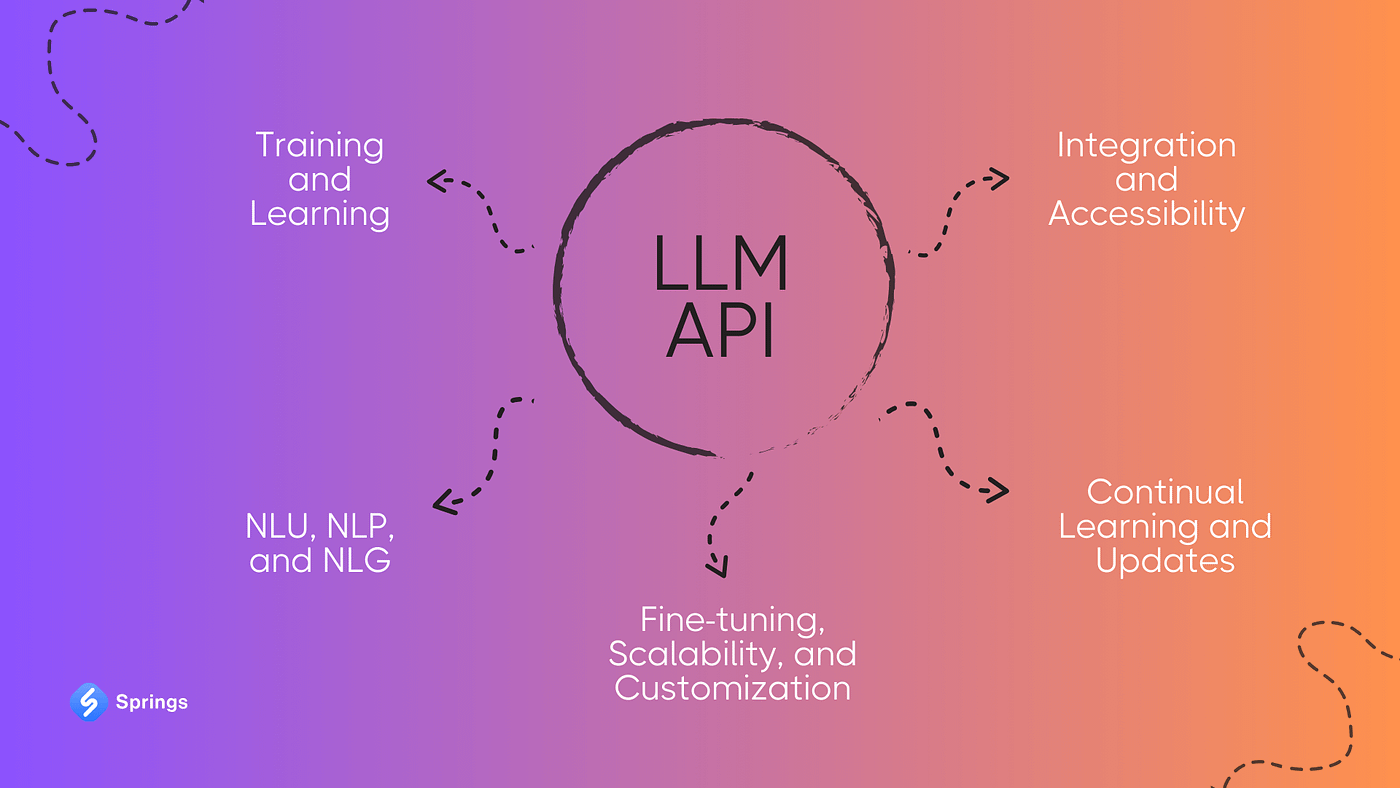
An LLM API (Large Language Model Application Programming Interface) is a service endpoint that allows software applications to send text prompts to a hosted AI model and receive generated text responses. Businesses use LLM APIs to integrate natural language processing into products — powering chatbots, code assistants, content generation tools, and document analysis workflows — without deploying or managing the underlying model infrastructure themselves. Access is usage-based, typically billed per 1,000 tokens processed.
How Does an LLM API Work?
An LLM API operates on a request-response architecture: an application sends an HTTP request containing a prompt and parameters (such as temperature and max tokens) to the provider's API endpoint. The model processes the input tokens, generates output tokens, and returns the response — typically in JSON format. Most providers offer REST APIs with SDKs for Python, JavaScript, and other languages. Costs accrue separately for input tokens (the prompt) and output tokens (the generated response), with output tokens typically costing 3–10× more.
How Fast Is LLM API Spending Growing?
LLM API spending has followed a trajectory that few technology markets have matched in recent history.
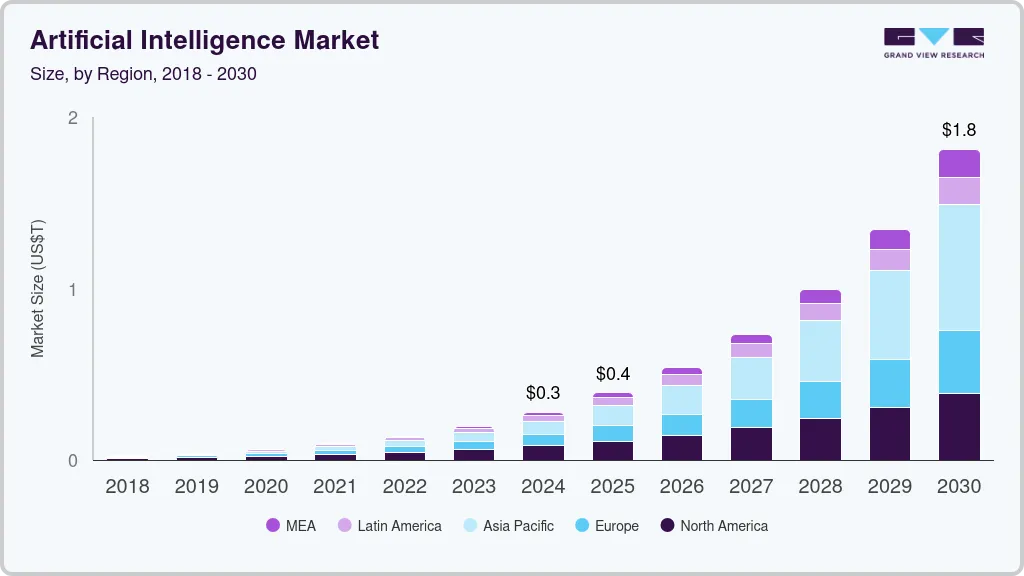
Enterprise spending reached $8.4 billion by mid-2025, more than doubling from approximately $3.5 billion in late 2024, according to Menlo Ventures' 2025 Mid-Year LLM Market Update. Gartner forecasts the global GenAI models market will exceed $25 billion in 2026 and reach $75 billion by 2029. Looking further out, Precedence Research projects the broader LLM market will hit $149.89 billion by 2035 at a 34.44% CAGR.
Beyond raw market size, the spending composition is shifting. Kong Inc.'s enterprise AI survey found that 73% of enterprises spend more than $50,000 annually on LLM APIs, and 37% exceed $250,000. Importantly, 72% of enterprises plan to increase AI API spending in 2025 — meaning the growth curve is not yet flattening.
Enterprise LLM API Spending Breakdown (2026)
| Annual LLM API Spend | % of Enterprises |
|---|---|
| Under $10,000 | ~10% |
| $10,000–$50,000 | ~17% |
| $50,000–$250,000 | ~36% |
| Over $250,000 | 37% |
Source: Kong Inc. Enterprise AI Survey 2025
More than 30% of the overall increase in API demand will come from LLM and GenAI tools by 2026, according to Gartner. API infrastructure is being reshaped, not just supplemented, by AI adoption.
Developer Adoption: Who Is Actually Using LLM APIs?
Developer adoption has reached near-saturation levels, but the relationship between usage and trust is more complicated than adoption numbers suggest.
Stack Overflow's 2025 Developer Survey — conducted across 49,000+ developers in 177 countries — found that 84% use or plan to use AI tools, up from 76% in 2024. Fifty-one percent of professional developers now use AI tools daily. Yet the same survey found that only 33% trust AI output, and 46% actively distrust the accuracy of AI-generated code.
This trust gap is not abstract. 45% of developers cite debugging "almost right" AI-generated code as their top frustration, and 66% say they spend more time fixing AI code than they anticipated. More pointedly, 35% of developers turn to Stack Overflow specifically after AI-generated code fails — AI assistance is creating new human-assistance demand, not eliminating it.
Other adoption indicators from enterprise AI adoption research:
- 37% of enterprises run production workloads across 5 or more LLM models — multi-model strategies are now the norm, not the exception
- 63% of enterprises use paid enterprise AI versions, while 17% rely on free tiers
For context on who builds with APIs: SQ Magazine's API usage analysis found that full-stack developers represent the largest segment of active API consumers at 25%.
LLM API Pricing Trends: A 97% Price Drop in Three Years
LLM API pricing has undergone a structural reset that no other enterprise software category has experienced at this speed.
In early 2023, accessing a GPT-4-class model cost approximately $30 per million input tokens. By April 2026, GPT-5-class performance is available for $1.25-$2.50 per million input tokens from OpenAI and Google, and DeepSeek's V3.2 model offers competitive quality at $0.14-$0.28 per million input tokens. That's a 97%+ reduction in three years for equivalent or superior capability.
Current LLM API Pricing Comparison (April 2026)
| Provider | Model | Input ($/1M tokens) | Output ($/1M tokens) |
|---|---|---|---|
| Gemini 2.5 Flash-Lite | $0.10 | $0.40 | |
| DeepSeek | V3.2 | $0.14–$0.28 | $0.28–$0.42 |
| OpenAI | GPT-5 Nano | $0.05 | $0.40 |
| Gemini 2.5 Pro | $1.25 | varies | |
| OpenAI | GPT-5.4 | $2.50 | $10.00 |
| Anthropic | Claude Sonnet 4.6 | $3.00 | $15.00 |
| Anthropic | Claude Opus 4.6 | $5.00 | $25.00 |
Sources: TLDL LLM Pricing 2026, BenchLM.ai, Fungies.io pricing comparison. Prices change frequently — verify with each provider before finalizing budgets.
The output token problem. Output tokens cost 3-10x more than input tokens across most providers. This is the single largest driver of unexpected LLM API bills. A workload that looks cheap in testing — where input tokens dominate — can become expensive in production when output generation scales up.
Cost optimization levers. Three strategies can materially reduce LLM API costs without sacrificing output quality:
- Batch API processing: All major providers offer approximately 50% discounts on non-real-time batch workloads
- Prompt caching: OpenAI offers 90% savings on cached prompt reads; Anthropic charges roughly 10% of base input price for cache hits; Google matches this rate
- Model routing: Industry data suggests 70-80% of production workloads can use mid-tier models (GPT-5.4, Claude Sonnet, Gemini Flash) with output quality that meets production standards — reserving flagship models for genuinely complex tasks
Which LLM Providers Dominate API Usage in 2026?
The enterprise LLM provider landscape has undergone a significant shift since 2023 — and the current leaderboard looks substantially different from two years ago.
According to Menlo Ventures' mid-2025 report:
| Provider | Enterprise API Share | YoY Change | Strength |
|---|---|---|---|
| Anthropic | 32% | +14pp (from 18%) | Code generation (42% market share), enterprise trust |
| OpenAI | 25% | -25pp (from ~50%) | Consumer dominance (ChatGPT: 74.2% consumer share) |
| 20% | Growing | GCP ecosystem, multimodal, Gemini Flash pricing | |
| Meta (Llama) | 9% | Growing | Open-weight; self-hosted and fine-tuned deployments |
| DeepSeek | ~1% | New entrant | Pricing influence; V3.2 forced industry-wide cuts |
| xAI (Grok) / Mistral | <5% | Growing | Vertical-specific challengers |
Market concentration. Five vendors control 88.22% of global LLM revenue, per GII Research's Global LLM Market Report. The market is consolidating around performance leaders even as the long tail of available models expands — 239 models were evaluated for the 2026 pricing comparison at BenchLM.ai alone.
Vendor stability. According to Menlo Ventures, only 11% of businesses switched LLM providers in the past year. The primary switching driver was performance — not price — indicating that enterprises are making provider decisions based on output quality for their specific use cases rather than API costs alone.
Enterprise LLM Adoption: From 5% to 80% in Three Years
Enterprise adoption of LLM APIs has followed one of the steeper technology adoption curves on record.
Kong Inc. citing Gartner predicts that more than 80% of enterprises will have deployed GenAI APIs by 2026 — a forecast made when fewer than 5% had done so in 2023. The 2025 trajectory indicates that prediction is being met, or exceeded. McKinsey's enterprise AI adoption data places enterprise AI adoption at 78% by 2025, up from 55% in 2023.
Key adoption indicators for 2026:
- 63% of enterprises have moved to paid enterprise AI subscriptions — free tier experimentation has largely given way to production commitments
Enterprise adoption varies by use case. Code generation, content production, and customer support automation have the highest penetration. Data analysis and decision support are growing but face more governance scrutiny. The fastest-growing LLM segment is domain-specific models, which are expanding at a 38%+ CAGR through 2033 as organizations move from general-purpose APIs to fine-tuned or specialized models for regulated industries.
The Execution Gap: Why Enterprise LLM Deployments Fall Short
The most underreported statistic in LLM API adoption data: 80%+ of enterprises have deployed LLM APIs, but research suggests only a fraction see real business impact.
enterprise AI adoption analysis, synthesizing multiple research sources including McKinsey surveys, identifies a persistent "execution gap" — the divergence between deployment rates and demonstrable business outcomes. Research from NTT Data and the MIT NANDA study estimates that 85-95% of enterprise GenAI implementations fail to meet original expectations.
What drives the execution gap? Based on aggregate research, three factors explain most failures:
- Organizational change management — technology adoption without workflow redesign. Teams have API access but no systematic way to measure or improve outputs
- Skills gaps — 30% of organizations cite a lack of specialized AI skills as a primary blocker, per enterprise surveys
- Security and compliance friction — particularly in financial services, healthcare, and legal, where governance requirements slow production deployment
Developer sentiment reflects the same tension. The Stack Overflow 2025 survey found that 71% of developers worry their organizations will fall behind competitors on AI. The same developers who are using AI tools daily are the ones raising concerns about output trust, debugging overhead, and the lack of reliable quality controls in production LLM workflows.
The productivity data is real but uneven. ChatGPT Enterprise users save an estimated 40-60 minutes per active workday, according to OpenAI's State of Enterprise AI 2025 report. These gains exist, but they accrue to teams with systematic prompt practices and human review workflows — not to teams that simply added API access.
Agentic AI and the Next Phase of LLM API Development
2025 was widely characterized as the "year of agents" — the shift from reactive chatbots to autonomous multi-step task executors. The 2026 data confirms this framing was accurate, while also revealing that agent deployments remain early-stage for most enterprises.
According to the Stack Overflow 2025 Developer Survey, only 31% of developers currently use AI agents at work, with 38% not planning to. However, among those who have deployed agents, 69% report a measurable productivity increase — the highest ROI metric in the survey.
The infrastructure enabling this shift is the Model Context Protocol (MCP), which allows LLMs to call external tools, APIs, and data sources as part of multi-step workflows. This is driving a new category of LLM API usage that is fundamentally different from single-turn inference: longer contexts, more API calls per task, and substantially higher per-task compute costs even as per-token prices fall.
Gartner's forward-looking data supports the trajectory: 30% of enterprises will automate 50%+ of network operations by 2026, per Gartner. Domain-specific LLMs — the subset most suited to agentic deployments — are growing at 38%+ CAGR through 2033, the fastest segment in the market.
The implication for API spending: agentic architectures are likely to drive the next spending inflection point. While per-token costs continue declining, the number of tokens consumed per business task will rise as agents handle more complex, multi-step workflows that previously required human orchestration.
Regional LLM API Adoption: US, Japan, and Global Markets
LLM API adoption is a global phenomenon, but with meaningful regional variation in pace and composition.
North America remains the largest market. Hostinger's LLM statistics compilation estimates the North American LLM market at $848.65 million in 2023, projecting growth at a 72.17% CAGR to reach $105.5 billion by 2030.
Japan is the largest non-US market for corporate LLM API customers, per Menlo Ventures data. International corporate API customer growth exceeded 70% in six months as of their mid-2025 report. This reflects both Japan's manufacturing and services sectors finding genuine automation use cases and government-level support for AI infrastructure investment.
Asia-Pacific broadly is projected to reach $94 billion in LLM market size by 2030 (89.21% CAGR), per Hostinger, driven by China (including DeepSeek's model releases reshaping the global pricing floor), South Korea, and India's rapidly growing developer ecosystems.
Europe projects $50.1 billion by 2030 (83.3% CAGR), though regulatory dynamics — particularly GDPR and the EU AI Act — create compliance overhead that shapes how European enterprises deploy LLM APIs compared to US counterparts.
Gender and demographic variation. Per Hostinger's LLM statistics compilation (citing Amperly April 2024 research), 44.1% of men use AI tools daily, compared to 29.5% of women — a gap that likely reflects both representation disparities in technical roles and different risk tolerance profiles for adopting accuracy-uncertain tools in professional contexts.
Challenges Shaping LLM API Adoption in 2026
The major barriers to LLM API adoption are well-documented but have not substantially changed year-over-year, suggesting structural rather than temporary obstacles.
Trust and accuracy. Stack Overflow's 2025 survey shows only 33% of developers trust AI output, compared to 46% who actively distrust it — the most significant trust gap in the data. Only 3% of developers report "highly trusting" AI output. This matters for API adoption because trust determines how deep teams integrate LLM APIs into production workflows vs. using them for low-stakes supplementary tasks.
Debugging overhead. 45% of developers identify debugging "almost correct" AI-generated code as their primary frustration. Critically, 66% say they spend more time fixing AI code than expected — meaning the productivity narrative needs a qualifier: productivity gains are real but contingent on having strong review and debugging processes alongside the API integration.
Rate limits and production reliability. Cryptic 429 errors with no actionable guidance are a frequently cited pain point in developer forums. As LLM API usage scales from prototypes to production, rate limit management becomes a genuine operational concern that requires API gateway infrastructure rather than direct API calls.
Vibe coding adoption. Despite hype around LLM-powered application development, 72% of developers say "vibe coding" (building apps through natural language prompts with minimal traditional code) is not part of their professional work, per Stack Overflow 2025. The gap between experimental and professional use cases remains wide.
Open-Source vs. Proprietary LLM APIs: Key Differences
The choice between open-source and proprietary LLM APIs is one of the most consequential technical decisions for enterprise AI teams in 2026.
| Factor | Proprietary APIs (OpenAI, Anthropic, Google) | Open-Source APIs (Llama, Mistral, DeepSeek) |
|---|---|---|
| Deployment | Managed by provider; no infrastructure needed | Self-hosted or via third-party hosting |
| Cost at low volume | Pay-per-token; low upfront cost | Free model weights; infrastructure costs apply |
| Cost at high volume | Can be expensive at billions of tokens/month | Self-hosting breaks even at ~100M+ tokens/month |
| Customization | Limited; prompt engineering and fine-tuning only | Full architecture access; train on proprietary data |
| Data privacy | Data leaves your infrastructure | Full data control when self-hosted |
| Time to production | Hours (API key + SDK) | Days to weeks (infrastructure provisioning) |
| Model quality (2026) | Still leads on most frontier benchmarks | Open models now match GPT-4 on many tasks |
| Best for | Prototypes, low-to-mid volume, regulated industries with cloud compliance | High-volume workloads, sensitive data, custom fine-tuning |
Open-source models now represent 62.8% of the market by model count. Llama 4, Mistral, Qwen, and DeepSeek V3.2 match GPT-4 and Claude on many benchmarks, narrowing the proprietary advantage to frontier reasoning and multimodal tasks. The practical recommendation: start with a proprietary API, migrate to hosted open-source as token volume grows, and only self-host when processing billions of tokens monthly with an infrastructure team in place.
Which is better: open-source or proprietary LLM APIs?
Neither is universally better — the choice depends on volume, data sensitivity, and team capacity. Proprietary APIs (OpenAI, Anthropic, Google) offer faster time to production and consistent model updates at low-to-mid token volumes. Open-source APIs (Llama, Mistral, DeepSeek) provide full data control, customization, and dramatically lower costs at scale. Most enterprise teams use proprietary APIs for production workloads under 100 million tokens/month and evaluate open-source alternatives as volume grows.
LLM API Usage Trends FAQ
What are the current LLM API usage statistics?
Enterprise LLM API spending reached $8.4 billion by mid-2025, more than doubling from $3.5 billion in late 2024. Over 80% of enterprises will have deployed GenAI APIs by end of 2026, up from under 5% in 2023, per Kong Inc. citing Gartner.
How much are companies spending on LLM APIs in 2026?
73% of enterprises spend over $50,000 annually on LLM APIs, and 37% exceed $250,000, per Kong Inc.. 72% of enterprises plan to increase AI API spending in 2025.
Which LLM API is most popular among developers?
It depends on the use case. For enterprise production workloads, Menlo Ventures' mid-2025 data shows Anthropic leading at 32% share, followed by OpenAI (25%) and Google (20%). For code generation specifically, Claude holds 42% market share. For consumer usage, ChatGPT remains dominant at 74.2% of the LLM consumer market.
How has LLM API pricing changed over time?
GPT-4-class API access cost approximately $30 per million input tokens in early 2023. By April 2026, comparable or superior models from OpenAI, Google, and Anthropic range from $1.25-$3.00 per million input tokens — a 90%+ reduction. DeepSeek V3.2, at $0.14-$0.28 per million input tokens, represents a further 97%+ reduction from the 2023 baseline for use cases where it delivers acceptable quality.
What percentage of developers use AI/LLM APIs?
84% of developers use or plan to use AI tools, with 51% using them daily, per the Stack Overflow 2025 Developer Survey. However, only 33% trust AI output — meaning high adoption coexists with significant skepticism about reliability.
What is the ROI of LLM API adoption?
ROI varies significantly by deployment maturity. ChatGPT Enterprise users report 40-60 minutes saved per active workday. The critical qualifier: research from NTT Data and MIT suggests 85-95% of enterprise GenAI implementations fail to meet original expectations — indicating that ROI is achievable but requires systematic implementation, not just API access.
What are the biggest challenges with LLM API adoption?
The top challenges are: accuracy trust (only 33% of developers trust AI output), debugging overhead for "almost right" outputs, security and compliance governance in regulated industries, lack of specialized AI skills (30% of organizations cite this), and the prototype-to-production gap — where pilots succeed but scaled deployments face organizational and workflow barriers that technical solutions alone can't solve.
What is agentic AI and how does it affect LLM API usage?
Agentic AI refers to LLM-powered systems that execute multi-step tasks autonomously — calling external APIs, reading data sources, and completing workflows without human intervention at each step. Unlike single-turn inference (send one prompt, get one response), agentic workflows chain multiple model calls together using frameworks like the Model Context Protocol (MCP). This significantly increases per-task token consumption and API spending, even as per-token prices fall. Only 31% of developers currently use AI agents at work, but 69% of those who do report measurable productivity gains — the highest ROI metric in the 2025 developer surveys.
Which LLM API should I use for my project?
The right LLM API depends on your use case and volume. For code generation, Anthropic's Claude API holds 42% enterprise market share and is the developer-preferred choice. For general-purpose workflows and broad ecosystem support, OpenAI's API remains the most widely integrated. For cost-sensitive or high-volume workloads, Google's Gemini Flash models and DeepSeek V3.2 offer competitive quality at 95%+ lower cost than flagship models. Start with OpenAI or Anthropic for prototypes, then benchmark alternatives once your production requirements are clear.
How do OpenAI, Anthropic, and Google API pricing compare?
As of April 2026: OpenAI's GPT-5.4 is priced at $2.50/1M input, $10/1M output; Anthropic's Claude Sonnet 4.6 at $3.00/$15.00; Google's Gemini 2.5 Pro at $1.25/1M input. At the budget end, OpenAI offers GPT-5 Nano at $0.05/$0.40 and Google offers Gemini 2.5 Flash-Lite at $0.10/$0.40. All three providers offer prompt caching at approximately 90% savings on cached reads. See the full pricing table above for complete details.
Final Verdict on LLM API Usage in 2026
The data tells three distinct stories depending on where you sit:
For developers: You're in a market where 84% of your peers are using AI tools but only 33% trust the output. That's not a contradiction — it reflects a pragmatic reality where the tools are useful enough to integrate and imperfect enough to require verification workflows. The productivity gains documented in enterprise deployments are real, but they're contingent on having systematic review practices. The tools are worth using; the question is how to use them without creating hidden debugging debt.
For enterprise buyers: The adoption stats are no longer a differentiator — 80%+ of your competitors are deploying the same APIs. The execution gap is where you win or lose. Organizations seeing 3x+ ROI on GenAI investments share common patterns: a clear use case (not "use AI everywhere"), internal champions with both technical and business context, and staged deployment with measurable milestones. Adoption is table stakes. Execution is the competitive variable.
For the market: LLM API pricing will continue declining — Gartner predicts over 90% cost reductions in frontier model inference by 2030. The growth in agentic AI workflows will shift the unit economics: fewer interactions but longer, more complex tasks. Domain-specific models growing at 38%+ CAGR will increasingly out-compete general-purpose APIs for specialized verticals. The market structure is consolidating around a small number of foundation model providers while application-layer differentiation intensifies.
Looking for more context on how AI teams are structuring their technology stacks? See our analysis of AI tech stack statistics and our breakdown of workflow automation statistics.
Get the weekly
One essay + 3 tools worth your attention, every Tuesday.
you@company.com